
- All
- Product Name
- Product Keyword
- Product Model
- Product Summary
- Product Description
- Multi Field Search
English
Views: 0 Author: Site Editor Publish Time: 2026-03-17 Origin: Site
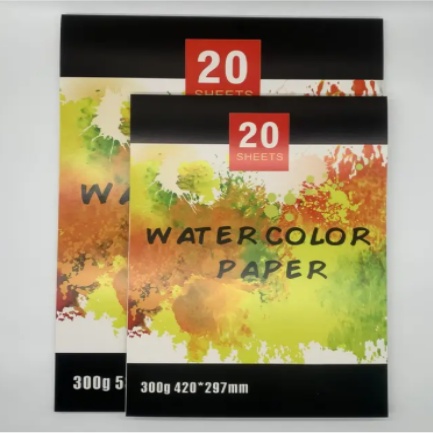
Few watercolor techniques feel as satisfying as lifting off masking fluid and seeing bright, untouched white paper appear exactly where you planned it. For many artists, that moment is where control and spontaneity finally meet. Watercolor is loved for its flow, softness, and transparent beauty, but it can also be unforgiving. Once a wash goes down, it is not always easy to reclaim a sharp highlight, clean sparkle, or fine detail. That is exactly why masking fluid has become such a useful tool. When used well, it helps artists protect the brightness of the paper while building layered color with more confidence. At Fu Te Lai Papers Co., Ltd., we work closely with watercolor paper products and understand that the success of masking fluid does not depend on the liquid alone.
Masking fluid is a removable liquid used to preserve selected areas of the paper before watercolor is applied. Once it dries, it forms a protective barrier over the surface. Paint can then be brushed across and around it without tinting the covered area. After the painting is dry, the masking fluid is gently removed to reveal the clean paper underneath.
This technique is especially useful because watercolor depends so much on preserving light. Unlike opaque media, watercolor usually relies on the whiteness of the paper for its brightest passages. Artists often use masking fluid to save areas such as:
Reflections on water
Fine branches or grass
Highlights in glass or metal
Sparkles in snow scenes
White petals, lace, or decorative details
Small textural accents in botanical or landscape work
Masking fluid allows more freedom during painting because the artist does not need to carefully paint around every tiny highlight from the beginning. That can make both loose painting and highly detailed work much more manageable.
When artists first experiment with masking fluid, they often focus on the fluid brand, the brush, or the removal method. Those matter, but the condition of the watercolor paper is equally important. If the paper surface is weak, poorly sized, too soft, or not suited for repeated wet work, the masking process may lift fibers, tear the sheet, or leave rough spots behind.
From our point of view as a paper manufacturer, good watercolor paper should offer a balance of absorbency, surface strength, and durability. The paper must accept masking fluid without letting it sink too aggressively into the surface, and it must also release the dried mask without damaging the top layer when removed correctly.
This becomes especially important in paintings that involve:
Multiple washes
Large masked sections
Fine masking lines
Repeated glazing
Detailed botanical or architectural subjects
In these situations, paper performance strongly affects the final result.
Not every watercolor paper behaves the same way under masking fluid. Surface texture, fiber content, and sizing all influence performance. Artists usually choose among hot press, cold press, and rough surfaces, and each has its own interaction with masking fluid.
Hot press watercolor paper has a smoother surface, which makes it easier to apply precise masking lines and achieve crisp edges. It is often preferred for illustration, fine detail, and controlled botanical work. However, because it is smoother, any surface damage from poor technique may be more visible.
Cold press paper is often the most versatile choice. It has enough texture to support expressive watercolor effects while still allowing fairly controlled masking. Many artists find it balances detail and wash behavior well.
Rough watercolor paper can create lively, broken edges and dramatic textures, but masking fluid may settle unevenly across its peaks and valleys. This can produce more organic effects, though not always the sharpest lines.
The table below shows how different paper surfaces may behave with masking fluid.
Watercolor Paper Surface | Common Result with Masking Fluid | Best Use |
Hot Press | Sharp lines, crisp edges, smooth removal when handled well | Fine detail, illustration, botanical work |
Cold Press | Balanced control and texture | General watercolor painting |
Rough | More irregular edges, textured masked shapes | Expressive landscapes, textured subjects |
Beyond surface texture, artists should also consider paper weight. Heavier sheets usually tolerate repeated wetting and rubbing better than lighter ones. Stronger paper gives more confidence during removal, especially for beginners who may still be learning how gently the masking should be lifted.
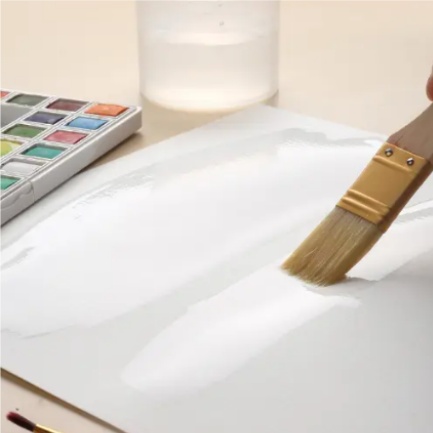
Using masking fluid successfully depends not only on the fluid itself but also on the tools around it. A simple setup makes the process more predictable.
Common tools include:
Masking fluid
An old brush, silicone tool, dip pen, ruling pen, or applicator
Clean scrap paper for testing
A dry, flat sheet of watercolor paper
Watercolor paints and brushes
A clean finger, rubber pickup, or soft eraser tool for removal after drying
Many artists avoid using their best watercolor brushes with masking fluid because the liquid can dry quickly and damage bristles. If a brush is used, it helps to coat it lightly with soap before dipping into the masking fluid. This can make cleaning easier.
The paper should be completely dry and clean before masking fluid is applied. If the surface is damp, the fluid may spread unpredictably or bind poorly to the paper.
Before applying anything, decide which parts of the painting must remain bright white. Masking fluid works best when used intentionally. Overusing it can make the painting feel mechanical, while selective use often gives better balance.
We strongly recommend testing the masking fluid on a scrap of the same watercolor paper. This reveals how quickly it dries, how it sits on the surface, and how easily it removes later.
Use your tool to place the masking fluid over the areas you want to preserve. Thin lines, dots, or shapes should be applied with steady pressure. Avoid very thick blobs, because they take longer to dry and may be harder to remove cleanly.
This stage matters more than many beginners realize. If paint is applied too early, the masking fluid may smear or break. Drying time depends on the thickness of the application and room conditions, but patience is important.
Once dry, paint over the paper as needed. You can apply washes across masked areas, glaze on top of previous layers, and build contrast in the surrounding passages.
Do not remove masking fluid from damp or cool-to-the-touch paper. The paint and paper should be fully dry first. Removing it too early can damage both surface and edges.
Rub it off slowly with clean fingers or a rubber pickup tool. Lift with care instead of scratching. The white paper underneath should remain intact if the paper quality is good and the technique is correct.
Learning to use masking fluid well can change the way an artist approaches watercolor. It makes room for broader washes, stronger contrast, and more deliberate highlights without sacrificing the freshness that watercolor is known for. The technique is simple in theory, but its success depends on timing, control, and the surface underneath. That is why the choice of watercolor paper matters so much. A dependable sheet helps masking fluid sit properly, release cleanly, and preserve the clean brilliance that makes watercolor so visually powerful. At Fu Te Lai Papers Co., Ltd., we understand that artists and art material buyers are looking for paper that performs consistently across real studio conditions, not just on a specification sheet. If you want to learn more about watercolor paper options for masking, layering, and detailed painting, you are welcome to contact Fu Te Lai Papers Co., Ltd. for further information and product support. The right watercolor sheet can make every highlight cleaner and every painting experience more rewarding.
Yes, it can damage watercolor paper if the paper surface is weak, if the fluid is left on too long, or if it is removed too aggressively. Stronger paper and careful technique reduce this risk.
Cold press and hot press watercolor paper are both commonly used. Hot press is often better for sharp detail, while cold press offers a more balanced surface for general painting.
It should be removed only after the painting is completely dry. Removing it too early can tear the paper surface or disturb the paint edges.
No. It is best used for highlights that are difficult to preserve by brushwork alone. Many artists combine masking fluid with painting around whites and lifting techniques for a more natural result.


